
If you’re in the market for an HDR monitor, you’ve probably come across terms such as ‘fake HDR’ and ‘pseudo-HDR’ — and now you’re worried that you’ll end up buying a bad HDR display.
We don’t blame you!
Monitor manufacturers put HDR labels on just about anything these days, and that’s why in this buying guide, we’ll fill you in on everything you need to know about HDR when it comes to monitors.
| Type | Monitor | Size | Resolution | Panel Type, Dimming Zones | Refresh Rate | |
|---|---|---|---|---|---|---|
| Best Mini LED HDR Monitors | 25" | 2560x1440 | IPS, 576 | 240Hz | ||
| 27" | 2560x1440 | VA, 1152 | 180Hz | |||
| 27" | 2560x1440 | IPS, 1152 | 320Hz | |||
| 27" | 3840x2160 | IPS, 1152 | 160Hz, 1080p 320Hz | |||
| 32” | 3840x2160 | IPS, 1152 | 144Hz | |||
| 32” | 3840x2160 | IPS, 1152 | 160Hz, 1080p 320Hz | |||
| 32” | 3840x2160 | IPS, 1152 | 144Hz | |||
| Best Mini LED UltraWide HDR Monitors | 34” | 3440x1440 | VA, 1152 | 200Hz | ||
| 49” | 5120x1440 | VA, 2048 | 240Hz | |||
| 57" | 7680x2160 | VA, 2392 | 240Hz | |||
| Best UltraWide OLED HDR Monitors | 34" | 3440x1440 | QD-OLED | 165Hz | ||
| 34" | 3440x1440 | QD-OLED | 240Hz | |||
| 39" | 3440x1440 | W-OLED | 240Hz | |||
| 45" | 3440x1440 | W-OLED | 240Hz | |||
| 45" | 3440x1440 | W-OLED | 240Hz | |||
| 45" | 5120x2160 | W-OLED | 165Hz, 2560x1080 330Hz | |||
| 49" | 5120x1440 | QD-OLED | 240Hz | |||
| Best OLED HDR Monitors | 27" | 2560x1440 | W-OLED | 240Hz | ||
| 27" | 2560x1440 | W-OLED | 280Hz | |||
| 27" | 2560x1440 | QD-OLED | 360Hz | |||
| 27" | 2560x1440 | QD-OLED | 500Hz | |||
| 27" | 2560x1440 | W-OLED | 540Hz, 720p 720Hz | |||
| 27" | 3840x2160 | QD-OLED | 240Hz | |||
| 32" | 3840x2160 | QD-OLED | 240Hz | |||
| 32" | 3840x2160 | W-OLED | 240Hz (1080p 480Hz) | |||
| 42" | 3840x2160 | W-OLED | 144Hz |



MSI MAG 272QP QD-OLED X50
- QD-OLED panel
- Infinite contrast ratio
- VRR up to 500Hz

MSI MPG 321URX

- QD-OLED panel
- Infinite contrast ratio
- VRR up to 240Hz

KTC M27T6

- 1152-mini LED FALD
- 27″ 1440p fast VA panel
- VRR up to 180Hz
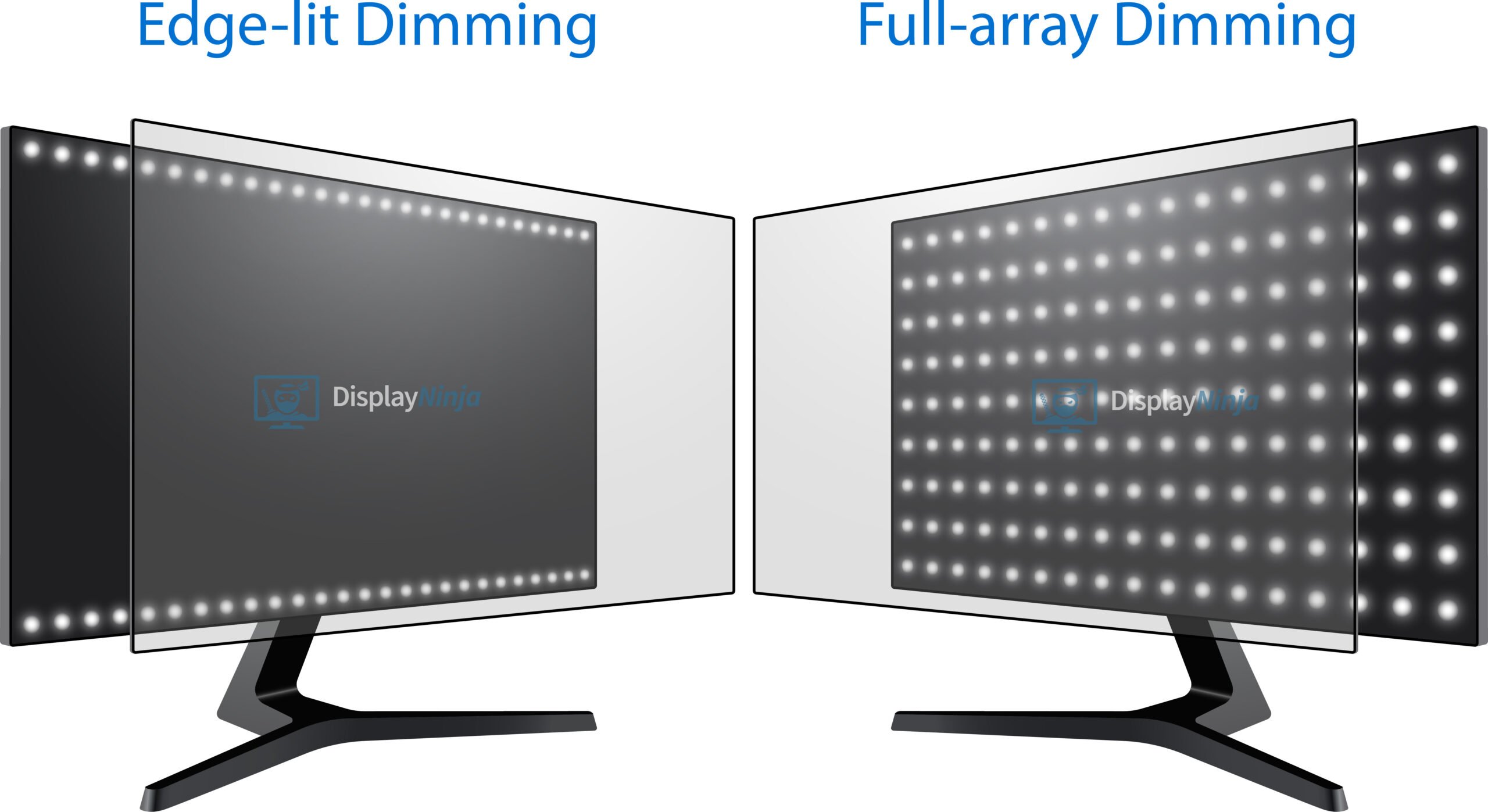
In truth, these are the only displays worth buying for the sake of HDR. They feature either OLED or LED panels with full-array local dimming (FALD), which is essential for good HDR (High Dynamic Range) picture quality.
We didn’t include any monitors with edge-lit local dimming – while there are some great models out there, they simply cannot do justice to HDR.
Here’s why: the beauty of HDR image lies in the display’s ability to produce incredibly bright and vivid details in highlights of the picture while preserving black depth and details in shadows at the same time, thus creating this ‘high dynamic range.’
Of course, a wide color gamut and a high screen resolution are also very important in making the picture look great!
On the other hand, LED-backlit HDR monitors without proper local dimming solutions simply cannot deliver a ‘true’ HDR picture as for them to produce specific bright details, for instance, their entire screen has to adapt, which leads to overexposing of dark areas.
You can view our changelogs for this buying guide at the end of this article.
Best Mini LED HDR Monitors
If you don’t want to deal with OLED’s risk of burn-in, limited brightness and uncommon subpixel layouts, mini LED is the way to go for HDR.
KTC M27T6
Best Budget HDR Monitor
Size: 27”
Resolution: 2560×1440
Panel: VA
Refresh Rate: 180Hz
The Pros:
- High peak brightness, decent pixel density, wide color gamut
- 1152-zone mini LED FALD
- Decent response time, low input lag
- Plenty of features, including VRR up to 180FPS
- Fully ergonomic stand
The Cons:
- Minor blooming/haloing noticeable in certain scenes
- Minor ghosting
- VRR brightness flickering in dark scenes of games with fluctuating frame rates (expected drawback of VA panels)
About The Monitor
The KTC M27T6 finally makes “budget HDR gaming monitor” a thing.
Sure, $300 is still a lot for a gaming monitor to some users, but you get exceptional value for your money. In fact, unlike some $900+ “HDR monitors”, the KTC M27T6 actually delivers a true HDR experience.
Image Quality
To start with, the KTC M27T6 is one of the cheapest monitors with FALD (full-array local dimming), which is the most important feature if you want good HDR image quality on an LED-backlit display.
It’s actually the most affordable display with VESA’s DisplayHDR 1400 certification.
What’s more, it doesn’t skimp on the number of local dimming zones. With 1152 mini LED dimming zones, you get excellent control over the backlight, resulting in simultaneously bright highlights (up to 1,800-nits) and deep inky blacks.
Apart from the decent full-array local dimming solution that allows for bright highlights without sacrificing black depth, the KTC M27T6 has a wide 96% DCI-P3 color gamut for vibrant colors.
Further, the 1440p resolution results in a decent pixel density of 108 PPI (pixels per inch) on the 27″ viewable screen of the monitor, meaning that you’ll get plenty of screen space with sharp details and text.
While the image won’t be as sharp as that of a 27″ 4K display, it will still look crisp while being significantly less demanding to drive – and you won’t have to use any scaling.
The monitor’s VA panel also ensures 178° wide viewing angles (with minor VA gamma/saturation shift), as well as a rapid 1ms GtG pixel response time speed.
While the KTC M27T6 still has some minor ghosting behind fast-moving objects, it’s not nearly as noticeable as it is with traditional high refresh rate VA panels.
Moving on, the KTC M27T6 supports a variable refresh rate for tear-free gameplay up to 180FPS, though you’ll get the typical VRR brightness flickering (in some scenes) associated with VA and OLED panels.
Other features include Black Equalize (improves visibility in dark scenes by manipulating the gamma curvature), crosshair overlays, various picture presets, on-screen timers and a refresh rate tracker.
Check out our full KTC M27T6 review for more information.
Design & Connectivity
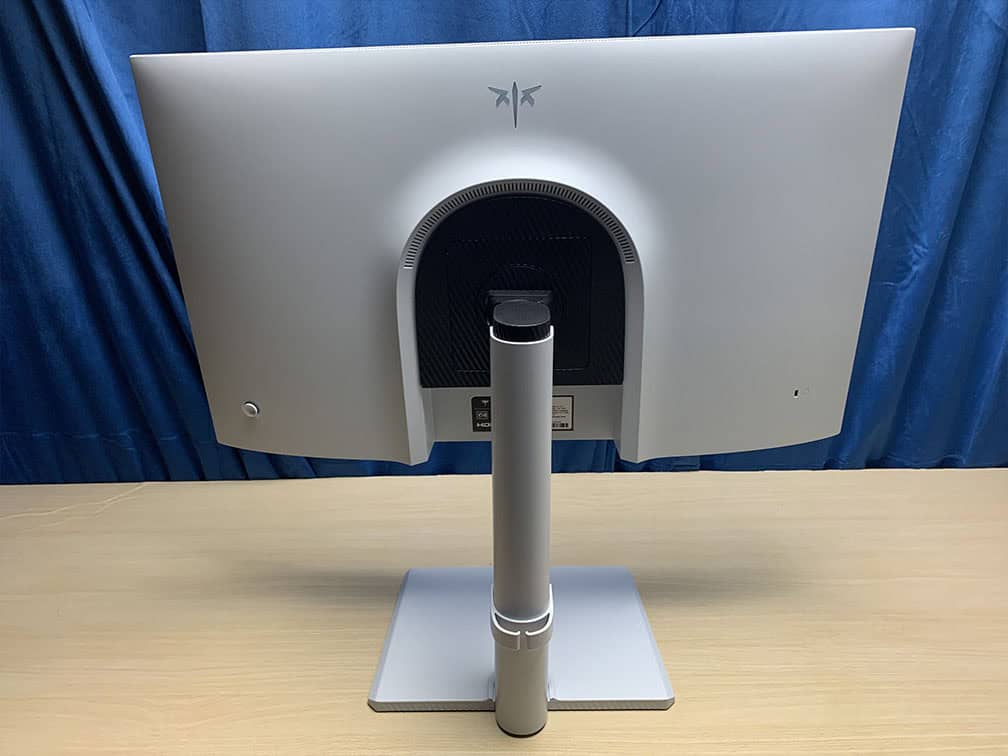
The stand of the monitor offers height adjustment up to 130mm, -5°/20° tilt, +/- 90° pivot, +/- 45° swivel and 100x100mm VESA mount compatibility.
Connectivity options include two HDMI 2.0 ports, DP 1.4, a headphone jack and a USB port for firmware updates.
Alternatives
- AOC Q27G40XMN – tilt-only stand and lower-tier DisplayHDR 1000
- AOC Q27G3XMN – only 336 dimming zones
- AOC Q27G4ZMN – 1152-zone, DisplayHDR 1000, and an ergonomic stand. It has a higher 240Hz refresh rate but not fast enough pixel response time to keep up with it, resulting in more dark level smearing
KTC M27P6
Best 27″ 4K HDR Monitor
Size: 27”
Resolution: 3840×2160
Panel: IPS
Refresh Rate: 4K 160Hz, 1080p 320Hz
The Pros:
- 1152-zone FALD, DisplayHDR 1400
- High pixel density
- Accurate and vibrant colors
- Plenty of features including VRR abd MBR up to 160Hz at 4K and 320Hz at 1080p
- Fully ergonomic stand and rich connectivity options, including KVM and USB-C with 65W PD
The Cons:
- Minor blooming/haloing noticeable in certain scenes
About The Monitor
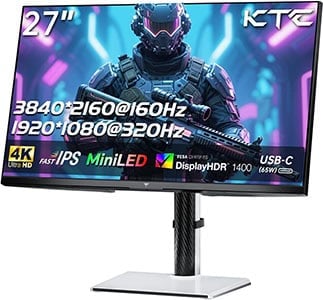
The KTC M27P6 provides you with the Dual Mode feature, allowing you to swap between 4K 160Hz and 1080p 320Hz!
Image Quality
The KTC M27P6 has a wide 98% DCI-P3 and 97% Adobe RGB color gamut coverage and a high 1800-nit peak brightness for HDR content.
While the difference between 4K and 1440p is not that noticeable on a 27″ monitor for watching videos and playing games, details and text are a lot sharper when it comes to regular desktop use, office-related work, photo/video editing, etc.
So, if you have a powerful enough GPU for high frame rate gaming at 4K, the KTC M27P6 is worth the investment.
The monitor also has a rapid 1ms GtG pixel response time speed and VRR support up to 320FPS.
Other supported features include crosshair overlays, a refresh rate tracker and Black Equalize (improves visibility in dark scenes).
Check out our full KTC M27P6 review for more information.
Design & Connectivity
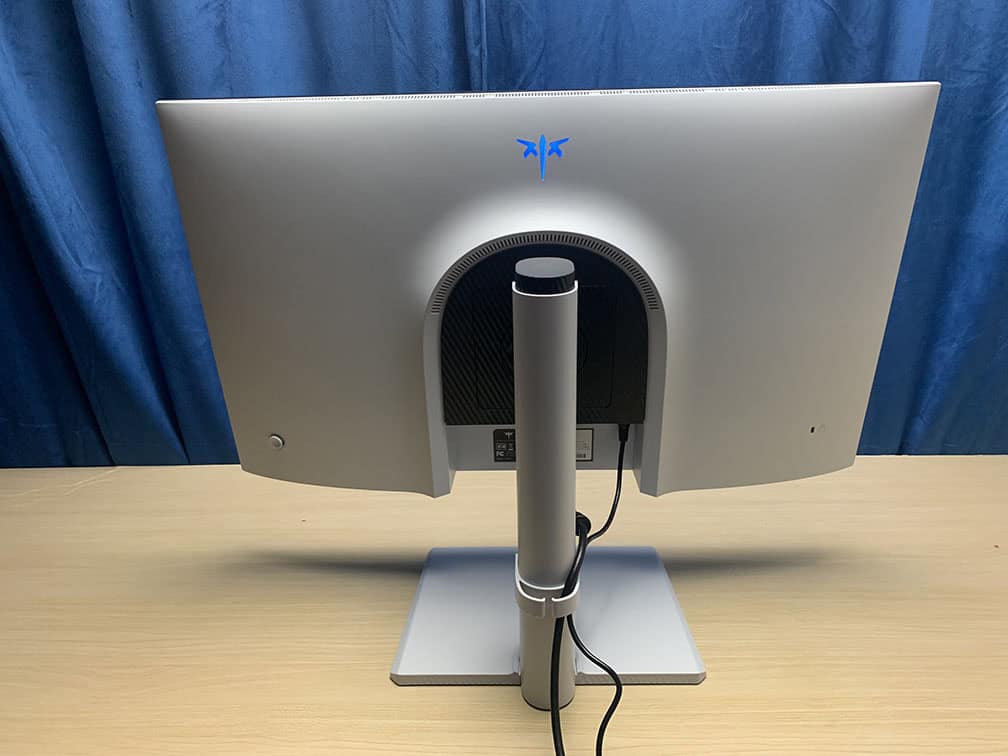
The stand is sturdy and offers height adjustment up to 130mm, +/- 45° swivel, 90° pivot, -5°/20° tilt and 100x100mm VESA mount compatibility.
Connectivity options include two HDMI 2.1 ports with full 48 Gbps bandwidth, DP 1.4 with DSC, USB-C with DP Alt Mode and 65W PD, a headphone jack, built-in KVM and a dual-USB 3.0 hub.
Alternatives
- MSI MAG 274UPDF E16M – based on the same panel but with lower-tier DisplayHDR 1000 and lower 15W PD over USB-C
KTC M32P10
Value 32″ 4K HDR IPS Gaming Monitor
Size: 32”
Resolution: 3840×2160
Panel: IPS
Refresh Rate: 144Hz
The Pros:
- High pixel density
- Accurate and vibrant colors
- Plenty of features including VRR up to 144Hz
- Fully ergonomic stand and rich connectivity options, including KVM and USB-C with 45W PD
The Cons:
- Minor blooming/haloing noticeable in certain scenes
About The Monitor
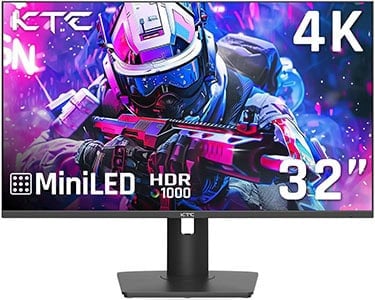
In case you want a flat-screen 32″ 4K high refresh rate HDR gaming monitor, the KTC M32P10 is the best option available.
Image Quality
The KTC M32P10 is a 32″ 4K 144Hz IPS gaming monitor with a 1152-zone mini LED FALD backlight and DisplayHDR 1000 for $550, which makes for exceptional value for the price.
It boasts a wide color gamut with 99% Adobe RGB and 98% DCI-P3 color space coverage, quick response time, 178° wide viewing angles and smooth VRR performance for tear-free gameplay up to 144FPS.
Additionally, the KTC M32P10 offers plenty of features, such as integrated KVM functionality and a USB-C port with DP Alt Mode and 45W Power Delivery, as well as the standard gaming features.
Design & Connectivity
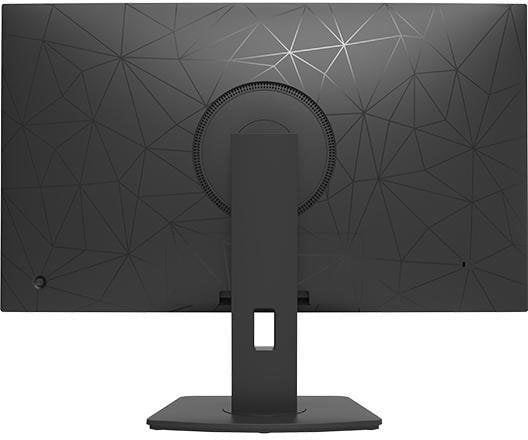
The stand is sturdy and offers height adjustment up to 130mm, +/- 45° swivel, -5°/20° tilt, +/- 90° pivot and 100x100mm VESA mount compatibility.
Connectivity options include two HDMI 2.1 ports with full 48 Gbps bandwidth, DP 1.4 with DSC, USB-C with DP Alt Mode and 45W PD, a headphone jack and a dual-USB 3.0 hub.
Alternatives
- Innocn 32M2V / Innocn 32A6V – similar models but seem to be discontinued
- Acer XV325QK V3 – 32″ 4K 160Hz IPS 1152-zone mini LED model with a 1080p 320Hz Dual Mode but no KVM or USB-C for $450

BenQ EX321UX
Best 32″ 4K HDR IPS Gaming Monitor
Size: 32”
Resolution: 3840×2160
Panel: IPS
Refresh Rate: 144Hz
The Pros:
- High pixel density
- Accurate and vibrant colors
- Plenty of features including VRR up to 144Hz
- Ergonomic stand and rich connectivity options, including KVM and USB-C with 65W PD
The Cons:
- Minor blooming/haloing noticeable in certain scenes
About The Monitor
If you want a better mini LED display, we recommend the BenQ EX321UX.
Image Quality
The BenQ EX321UX is based on the same (or a very similar) panel as the KTC M32P10 with the 1152-zone mini LED FALD backlight, 99% DCI-P3 / Adobe RGB color gamut coverage and other key panel-related specifications.
However, its local dimming solution is a bit better tuned. Moreover, it has a more premium design, better OSD controls (with a remote controller provided) and a 3-year warranty.
For more information, be sure to check out our detailed BenQ EX321UX review.
Design & Connectivity

The stand of the monitor is sturdy and offers height adjustment up to 100mm, -5°/20° tilt, +/- 15° swivel and 100x100mm VESA mount compatibility.
Connectivity options include DisplayPort 2.1 (UHBR10), three HDMI 2.1 ports with 48 Gbps (one with eARC), USB-C with DP Alt Mode and 65W PD, a headphone jack and a USB hub (three USB-A 3.0 and two USB-C ports).
Alternatives
- Acer Predator X32FP / ASUS PG32UQXR – go for around the same price yet have fewer dimming zones (576)
- ViewSonic XG321UG / ASUS PG32UQX – 1152 dimming zones with the G-SYNC Ultimate module, but they go for ~$2,000 and have a slower response time speed and no HDMI 2.1
Best Mini LED UltraWide HDR Monitors
Want an ultrawide monitor with a mini LED backlight for proper HDR support? You’ll find al the best models right here!

Samsung G95NA
Best 49″ Mini LED HDR Gaming Monitor
Size: 49”
Resolution: 5120×1440
Panel: VA
Refresh Rate: 240Hz
The Pros:
- High contrast ratio, impressive peak brightness, decent color gamut
- Fast response time
- Plenty of features, including VRR up to 240Hz
- Ergonomic stand, USB hub
The Cons:
- Expensive
- Noticeable blooming in some scenes
- VRR brightness flickering in dark scenes of games with fluctuating frame rates (expected drawback of VA panels)
About The Monitor
In case you want a 49″ super-ultrawide gaming monitor with a mini LED backlight for a good HDR image quality, the Samsung Odyssey Neo G95NA is the only option available, if you can find it in stock.
Image Quality
This gigantic 49″ sized screen has a mini LED backlight that’s capable of reaching up to 1,000-nits of brightness for small windows and a brief time, as well as a strong 400-nits sustained brightness for SDR (600-nits for HDR) with a 100% white window. So, the monitor is overall brighter and can produce punchier highlights.
However, even though it has one of the best FALD implementations with 2048 zones, it still has over 7 million pixels, so those zones won’t be able to always effectively dim parts of the image that are supposed to be dark without some light bleeding into them from the surrounding lit zones, thus creating blooming or the halo effect.
To be fair, this is not a big issue unless you’re looking at a particularly demanding scene, such as fireworks and stars in the night sky.
The Samsung Odyssey Neo G9 also doesn’t have as vibrant colors as that of OLEDs with around 95% DCI-P3 gamut coverage (~85% Adobe RGB, ~125% sRGB gamut size).
Moving on, while the monitor is rather fast for an LED-backlit panel, some minor ghosting and overshoot can be detected with some fast-moving objects, though it won’t bother most users.
The 5120×1440 resolution results in a pixel density of 110 PPI on the 49″ sized screen of the monitor and you get a regular RGB subpixel layout, so text is sharp and clear with plenty of screen real estate available.
Lastly, the monitor supports FreeSync Premium Pro and it’s G-SYNC Compatible with a 96-240Hz range, however, VRR can cause micro-stuttering on some units, which some users might find bothersome.
Other useful features include Black Equalizer, PiP/PbP and RGB lighting.
Visit our Samsung Neo G9 review for more details.
Design & Connectivity

The stand of the monitor is robust and versatile with up to 120mm height adjustment, -5°/15° tilt, +/- 15° swivel and 100x100mm VESA mount compatibility, while the screen has an aggressive 1000R curvature for added immersion and a matte anti-glare coating against reflections.
Connectivity options include DisplayPort 1.4 with DSC, two HDMI 2.1 ports (limited to 144Hz), a headphone jack and a dual-USB 3.0 hub.
Alternatives
If you’re looking for something a bit different yet also extravagant, check out the Samsung Odyssey Ark. It’s a 55″ 4K UHD display with a 1000R curved fast VA panel and a 1056-zone mini LED FALD backlight.
Considering its screen size though, the amount of dimming zones is not as generous as that of the G95NA. Therefore, the HDR image quality won’t be as good as that of the Neo G9 yet the display is more expensive. It’s more of a niche display for those looking for a curved 55″ display that can be used both vertically and horizontally.

Samsung G95NC
57″ Super-UltraWide HDR Gaming Monitor
Size: 57”
Resolution: 7680×2160
Panel: VA
Refresh Rate: 240Hz
The Pros:
- High contrast ratio, impressive peak brightness, decent color gamut
- Fast response time
- Plenty of features, including VRR up to 240Hz
- Ergonomic stand, USB hub, KVM
The Cons:
- Expensive
- Noticeable blooming in some scenes
- VRR brightness flickering in dark scenes of games with fluctuating frame rates (expected drawback of VA panels)
About The Monitor
The Samsung Odyssey G95NC is basically a beefed-up version of the G95NA.
Image Quality
While the G95NA is equivalent to two 27″ 2560×1440 displays side by side, the G95NC is comparable to two 32″ 4K monitors sitting next to each other, just without the bezels in between them.
This 57″ super-ultrawide gaming monitor has a screen resolution of 7680×2160, so you will need a powerful PC rig to do it justice.
Keep in mind that the RTX 40-series GPUs don’t support the maximum resolution of this monitor – they’re limited to 120Hz at 7680×2160, whereas RTX 50-series and AMD’s 7000-series or newer cards support 240Hz.
The Samsung Odyssey G9/G95NC S57CG95 has a peak brightness of 1300-nits for <10% white windows and up to 800-nits for 100% white windows. Thanks to its 2392-zone mini LED FALD backlight, blooming is minimal, though still noticeable in demanding scenes.
Finally, you get a respectable 95% DCI-P3 color gamut coverage, a rapid 1ms GtG pixel response time speed and the standard gaming feature set, including VRR support up to 240Hz.
Check out our full Samsung G95NC review for more information.
Design & Connectivity

The stand of the monitor offers height adjustment up to 120mm, -5°/12° tilt, +/- 15° swivel and 100x100mm VESA mount compatibility. The screen has a steep 1000R curvature for added immersion.
Connectivity options include DP 2.1, three HDMI 2.1 ports, a headphone jack, two USB-A 3.0 ports and two USB-B ports for the integrated KVM functionality.
Best UltraWide OLED HDR Monitors
Don’t want to deal with blooming artifacts of mini LED monitors? Want an instantaneous pixel response time speed and an infinite contrast ratio without backlight bleeding? An OLED monitor is for you!

Dell AW3423DWF
Best Value 34″ OLED UltraWide Gaming Monitor
Size: 34”
Resolution: 3440×1440
Panel: QD-OLED
Refresh Rate: 165Hz
The Pros:
- Infinite contrast ratio, high peak brightness, wide color gamut
- Instant response time
- Plenty of features, including VRR up to 165Hz
- Ergonomic stand, USB hub
- 3-year warranty that covers burn-in
The Cons:
- Risk of burn-in
- Minor text fringing due to the triangular RGB subpixel layout
- Not as bright as mini LED displays
About The Monitor
The Dell Alienware AW3423DWF is one of the best value HDR gaming monitors you can get right now!
Image Quality
Based on an OLED panel, the AW3423DWF has self-emissive pixels that can individually turn off thereby providing you with true blacks and an infinite contrast ratio without any backlight bleeding, blooming, or glowing.
Another advantage of OLEDs is that the pixels can instantaneously change colors, resulting in no noticeable trailing behind fast-moving objects, making them ideal for fast-paced games.
The Dell AW3423DWF uses Samsung’s new QD-OLED panel that’s enhanced with quantum dots for a wider color gamut, higher brightness and better burn-in resistance.
It covers 99.3% of the DCI-P3 color space and 95% Adobe RGB, which is equivalent to around 149% sRGB gamut size. The colors are vibrant and rich, allowing you to watch HDR content the way its creators intended.
You’ll also find dedicated sRGB and DCI-P3 color modes with adjustable brightness and gamma in case you want to do color-critical work or to view SDR content without over-saturation.
Further, the monitor has a peak brightness of 1,000-nits and it can sustain 250-nits when displaying a 100% white window. Mini LED displays can get significantly brighter, but they don’t have as high contrast ratio due to blooming artifacts.
In short, OLED displays are better at displaying dark scenes and viewing content in dim rooms, whereas mini LED monitors excel at displaying bright scenes and viewing content in bright environments.
The main disadvantage of OLEDs is the risk of image burn-in.
If a static image is left on the screen for too long, some bright elements can become permanently stuck. However, as long as you use a screen saver and the monitor’s integrated features, such as Pixel Refresher and Panel Refresher, you’ll be fine. Dell even offers a three-year warranty that covers burn-in.
Moving on, the Dell Alienware AW3423DWF has an ultrawide resolution of 3440×1440 pixels, which results in a pixel density of 110 PPI (pixels per inch) on its 34″ viewable screen. Overall, you get plenty of screen space with sharp details and no scaling necessary, while the ultrawide format provides you with an extended field of view in compatible games. Moreover, it’s not nearly as demanding to drive as 4K UHD.
One thing to keep in mind is that while the monitor has regular RGB subpixels, they’re in a triangular layout, so there’s some colored fringing on small text. For gaming and videos, it’s not an issue, but if you’re looking at text a lot (coding, writing), it might bother you a bit.
Features
The Dell AW3423DWF supports VRR (variable refresh rate) for tear-free gameplay up to 165FPS.
The combination of the instant response time, imperceptibly low input lag and VRR ensure a responsive and enjoyable gaming experience. Unfortunately, MBR (Motion Blur Reduction) is not supported, which could’ve reduced the otherwise unavoidable perceived motion blur via backlight strobing.
Other features include Dark Stabilizer (improves visibility in dark scenes), crosshair overlays, on-screen timers, a refresh rate tracker, RGB lighting, PiP/PbP and more.
Check out our full Dell AW3423DWF review for more information.
Design & Connectivity

The stand of the monitor is robust and versatile with up to 110mm height adjustment, -5°/21° tilt, +/- 20° swivel, +/- 4° pivot and 100x100mm VESA mount compatibility.
The screen has a subtle 1800R curvature and a glossy screen finish, which makes the image more vivid as there’s no graininess associated with matte anti-glare coatings. However, it also makes the screen more reflective and raises black levels when hit by direct lighting.
Connectivity options include two DisplayPort 1.4 inputs, HDMI 2.0 (limited to 100Hz), a headphone jack, line-out and a quad-USB 3.0 hub.
Alternatives
There are 6 monitors that use the same QD-OLED panel, offering a similar image quality and performance. However, they still have some differences in features, warranty, connectivity options, price, HDR accuracy, etc. Here’s how they compare:
| Dell AW3423DWF | Dell AW3423DW | MSI MEG342C | MSI 341CQP | Samsung OLED G85SB / G85SD | Philips Evnia 34M2C8600 | |
| Max. Refresh Rate | 165Hz (120Hz 10-bit) | 175Hz (144Hz 10-bit) | 175Hz 10-bit | 175Hz 10-bit | 175Hz 10-bit | 175Hz 10-bit |
| Ports | 2x DP 1.4, 1x HDMI 2.0, 4x USB | 1x DP 1.4, 2x HDMI 2.0, 4x USB | 1x DP 1.4 2x HDMI 2.1 1x USB-C (65W PD) 4x USB | 1x DP 1.4 2x HDMI 2.1 1x USB-C, 2x USB | 1x Mini-DP 1.4, 1x micro HDMI 2.1 1x USB-C (65W PD) 1x USB-C | 1x DP 1.4, 2x HDMI 2.0, 1x USB-C (90W PD), 4x USB |
| Cooling fans | 1 | 2 | 1 | None | None | 1 |
| HDR (AMD GPUs) | Good | Good | Good | Good | Bad* | Bad** |
| HDR (NVIDIA GPUs) | Good | Good | Good | Good | Good | Bad** |
| PiP/PbP | Yes | No | Yes | Yes | No | Yes |
| Ambient Light Sensor | No | Yes | Yes | No | Yes | Yes |
| Updatable Firmware | Yes | Yes | Yes | Yes | Yes | Yes |
| Other Notable Features | N/A | G-SYNC module | KVM switch | KVM Switch | Tizen OS | KVM Switch Ambiglow RGB |
| Price (MSRP) | $1,100 | $1,300 | $1,100 | $900 | $1,500 | $800 |
| Burn-in Warranty (in the US) | 3 years | 3 years | 3 years | 3 years | N/A | N/A |
**HDR Game Mode reaches ~1000-nits but over-brightens the image, while True Black Mode is limited to ~450-nits and some scenes are too dark
The pricing and warranty can vary by region. Generally, we recommend going with the Dell AW3423DWF due to its price and warranty that covers burn-in.

MSI MPG 341CQPX
Best 34″ UltraWide Gaming Monitor
Size: 34”
Resolution: 3440×1440
Panel: QD-OLED
Refresh Rate: 240Hz
The Pros:
- Infinite contrast ratio, high peak brightness, wide color gamut
- Instant response time
- Plenty of features, including VRR up to 240Hz
- Ergonomic stand, USB-C 98W PD, KVM
- 3-year warranty that covers burn-in
The Cons:
- Risk of burn-in
- Minor text fringing due to the triangular RGB subpixel layout
- Not as bright as mini LED displays
About The Monitor
The MSI MPG 341CQPX is a generation newer 34″ 3440×1440 QD-OLED gaming monitor than the Dell AW3423DWF – the main improvement is the 240Hz refresh rate.
Image Quality
A 240Hz refresh rate provides you with a small but noticeable improvement in motion clarity as opposed to 165Hz/175Hz of the previous-generation models.
The Dell AW3423DWF can often be found on sale for $700, while the MSI MPG 341CQPX goes for $900, so whether that price difference is worth the extra refresh rate is up to you.
However, the MSI MPG 341CQPX also offers a few extra features, including a USB-C port with 98W Power Delivery, HDMI 2.1 with 48 Gbps, built-in KVM switch, advanced OLED care features (Pixel Shift, Logo Brightness Adjustment, etc.) and uses a heatsink for cooling instead of an audible fan.
Be sure to check out our in-depth MSI MPG 341CQPX review for more information.
Design & Connectivity

The monitor’s stand is robust and offers height adjustment up to 100mm, -5°/20° tilt, +/- 30° swivel and 100x100mm VESA mount compatibility.
It has the same glossy screen surface and 1800R curvature as the Dell AW3423DWF.
Connectivity options include DP 1.4 with DSC, two HDMI 2.1 ports with full 48 Gbps, USB-C with DP Alt Mode and 98W PD, a dual-USB 3.0 hub and a headphone jack.
Alternatives
- Dell Alienware AW3425DW – based on the same panel for $50 less, but has no USB-C or KVM
There are also 34″ 3440×1440 240Hz W-OLED gaming monitors available, such as the ASUS PG34WCDM and the LG 34GS95QE.
While they offer a higher white luminance, their W-OLED panel has more noticeable fringing issues, not as high color volume and gamut and a steep 800R screen curvature. They are, however, also available as 39″ 3440×1440 240Hz variants, such as the LG 39GS95QE.

LG 39GS95QE
39″ HDR UltraWide Gaming Monitor
Size: 39”
Resolution: 3440×1440
Panel: OLED
Refresh Rate: 240Hz
The Pros:
- Infinite contrast ratio, decent peak brightness, wide color gamut
- Instant response time
- Plenty of features, including VRR up to 240Hz
- 2-year warranty that covers burn-in
The Cons:
- Risk of burn-in
- Noticeable text fringing due to RWBG subpixel layout
- Not as bright as mini LED displays
About The Monitor
If you want a larger ultrawide HDR monitor, check out the LG 39GS95QE!
Image Quality
A lot of gamers prefer ultrawide displays larger than the most popular 34″ models, mainly in the 38″ – 39″ form factor range. However, they also prefer the screen resolution to scale up for that high pixel density, in this case, that would be 3840×1600 for the same ~110 PPI of the 34″ 3440×1440 models.
Unfortunately, the LG 39GS95QE has the same 3440×1440 resolution as those 34″ models, so while you get a bigger screen and the same amount of screen real estate, text and fine details won’t be as sharp.
You get a pixel density of roughly 95 PPI, which is the same as that of a 24″ 1080p or a 32″ 2560×1440 display. So, the details are still going to be reasonably sharp. To help illustrate the size of this monitor, you can think of the LG 39GS95QE as a 32″ 2560×1440 display with ~30% extra width.
It uses LG’s MLA+ W-OLED panel with improved brightness of up to 1300-nits peak (for small HDR highlights) and 275-nits for 100% APL (Average Picture Level, white window size). However, its colors aren’t quite as bright and saturated as that of QD-OLED panels, but you still get an excellent 98.5% DCI-P3 gamut coverage.
Further, this LG’s W-OLED panel still uses the older RWBG (instead of their new RGWB) subpixel layout that will cause minor fringing on small text and fine details. This isn’t noticeable in videos and games, but it can be distracting if you plan on doing a lot of work that involves reading and typing.
Finally, the LG 39GS95QE has a high 240Hz refresh rate, which in addition to OLED’s instantaneous pixel response time speed ensures buttery-smooth performance. VRR is supported as well with NVIDIA G-SYNC Compatible and AMD FreeSync Premium Pro certifications for tear-free gameplay up to 240FPS.
Design & Connectivity

The stand of the monitor is sturdy and offers a good range of ergonomics, including up to 120mm height adjustment, +/- 10° swivel, -10°/15° tilt and 100x100mm VESA mount compatibility.
The screen has a steep 800R curvature for added immersion and a bit heavier matte anti-glare coating that adds some graininess to the image (mainly noticeable on solid colors) but it efficiently prevents reflections.
Connectivity options are abundant and include DisplayPort 1.4 with DSC, two HDMI 2.1 ports with full 48 Gbps bandwidth, a headphone jack (with DTS Headphone:X support) and a dual-USB 3.0 hub.
Alternatives
- ASUS ROG Swift PG39WCDM – ASUS’ model based on the same panel with KVM, USB-C (90W Power Delivery, DP Alt Mode), BFI up to 120Hz and a better 3-year burn-in warranty. No word on pricing and availability yet though.

Corsair Xeneon Flex
Bendable 45″ HDR UltraWide Gaming Monitor
Size: 45”
Resolution: 3440×1440
Panel: OLED
Refresh Rate: 240Hz
The Pros:
- Infinite contrast ratio, decent peak brightness, wide color gamut
- Instant response time
- Plenty of features, including VRR up to 240Hz
- Bendable screen, USB hub
- 3-year warranty that covers burn-in
The Cons:
- Risk of burn-in
- Not as bright as mini LED displays
- Tilt-only stand, not VESA mount compatible
- Expensive
- Low pixel density
About The Monitor
Those looking for a premium HDR gaming monitor might be interested in the Corsair Xeneon Flex 45WQHD240 with a bendable screen!
Image Quality
A 45″ ultrawide is taller than a 32″ 16:9 monitor and almost as wide as a 49″ super-ultrawide display, which results in a particularly immersive viewing experience.
Its 3440×1440 resolution is not ideal for such a huge screen size as you get a pixel density of ~83 PPI (similar to that of 27″ 1080p displays) on top of the RWBG subpixel layout, so text and fine details won’t be that sharp.
However, since you’ll be sitting further away from the screen as you would from a 27″ 1080p monitor, the individual pixels won’t be noticeable.
In games and videos, this won’t be an issue at all, and a higher 5120×2160 resolution would be significantly more demanding on the GPU.
The Corsair Flex also has a bendable screen, allowing you to bend it anywhere between 800R and completely flat.
It has a decent peak brightness for small HDR highlights, but SDR brightness is quite low (150-nits 100% APL, 600-nits 10% APL, 800-nits < 3% APL).
Other features include a 98% DCI-P3 wide color gamut and VRR support up to 240Hz for tear-free gameplay. The monitor also features crosshair overlays, a refresh rate tracker and PiP/PbP support.
Design & Connectivity

The stand is tilt-only by ~22° and while its legs are removable, the screen is not VESA mount compatible. You can get the desk clamp adapter separately though.
Connectivity options include two HDMI 2.1 ports, DP 1.4 with DSC, USB-C with DP Alt Mode and 30W PD, a quad-USB 3.0 hub and a headphone jack.

LG 45GS95QE
45″ HDR UltraWide Curved Gaming Monitor
Size: 45”
Resolution: 3440×1440
Panel: OLED
Refresh Rate: 240Hz
The Pros:
- Infinite contrast ratio, decent peak brightness, wide color gamut
- Instant response time
- Plenty of features, including VRR up to 240Hz
- Ergonomic stand, USB hub
- 2-year warranty that covers burn-in
The Cons:
- Risk of burn-in
- Not as bright as mini LED displays
- Low pixel density
About The Monitor
Update: We now recommend the LG 45GX900A instead.
The LG 45GS95QE is also a 45″ 3440×1440 240Hz ultrawide OLED gaming monitor, but it has a fixed 800R screen curvature!
Image Quality
Even though it doesn’t have a cool bendable screen, the LG 45GS95QE still has some advantages over the Corsair Xeneon Flex. To start with, it’s more affordable as you can find it for $1,100, whereas the Flex starts at $1,300.
More importantly, it has a newer MLA+ W-OLED panel with a significantly higher brightness. It can reach up to 1,300-nits for small < 3% APL, 750-nits for 10% APL and 275-nits for 100% APL.
Other than that, the specifications are pretty much the same, including the 98.5% DCI-P3 color gamut, VRR support up to 240Hz and the standard gaming features.
Check out our LG 45GS96QB review for more details – it’s the same monitor but with a different stand, integrated 7W speakers and a USB-C port (65W) for $100 extra.
Design & Connectivity

The stand of the monitor is sturdy and offers a good range of ergonomics, including up to 120mm height adjustment, +/- 10° swivel, -1°/15° tilt and 100x100mm VESA mount compatibility.
Connectivity options include DisplayPort 1.4, two HDMI 2.1 ports, a dual-USB 3.0 hub and a headphone jack with DTS Headphone:X support.
Alternatives
The LG 45GR95QE is the older version of this monitor. It can be found for $1,000, but it has notably lower brightness performance (similar to the Xeneon Flex).
The LG 45GS96QB uses the same panel as the 45GS95QE, but has a different design, dual 7W integrated speakers and a USB-C port with DP Alt Mode and 65W Power Delivery. Usually, it’s $100 more expensive than the 45GS95QE.

LG 45GX950A
Best UltraWide OLED Gaming Monitor
Size: 45”
Resolution: 5120×2160
Panel: OLED
Refresh Rate: 165Hz, 2560×1080 330Hz
The Pros:
- Infinite contrast ratio, decent peak brightness, wide color gamut
- Instant response time
- Plenty of features, including VRR up to 165Hz (330Hz in Dual Mode)
- Ergonomic stand, USB hub, USB-C 90W PD
- 2-year warranty that covers burn-in
The Cons:
- Risk of burn-in
- Not as bright as mini LED displays
- Low pixel density
About The Monitor
If you want a 45″ OLED monitor with a higher screen resolution, you’re going to love the LG 45GX950A!
Image Quality
The LG 45GX950A has a screen resolution of 5120×2160 (5K2K), which results in a high pixel density of 125 PPI! So, not only do you get a huge screen for an immersive viewing experience, but you also get plenty of screen real estate with sharp details!
Moreover, it has the improved RGWB subpixel layout, so fringing on small text and fine details is completely gone! MLA+ technology is present as well, allowing for the high 1300-nit peak brightness for 1.5% APL and 275-nits for 100% APL.
Other specifications include 98.5% DCI-P3 gamut coverage with an sRGB emulation mode, typical gaming features, such as Black Stabilizer and crosshair overlays, PiP/PbP support and even hardware calibration!
The monitor also has a Dual Mode, allowing you to switch to the 2560×1080 resolution with a higher 330Hz refresh rate. However, pixel density is quite low here, resulting in a blurry image, so this feature is only useful for competitive fast-paced games and if you’re not too sensitive to low PPI.
Check out our full LG 45GX950A review for more information.
Design & Connectivity

The stand of the monitor offers height adjustment up to 120mm, +10°/15° tilt, +/- 10° swivel and 100x100mm VESA mount compatibility.
The screen has a steep 800R curvature for added immersion and a bit heavier matte anti-glare coating that’s very efficient at diffusing reflections, but adds some graininess to the image (only slightly noticeable on solid colors).
Connectivity options include DP 2.1 (UHBR 13.5), two HDMI 2.1 ports, USB-C with DP Alt Mode and 90W PD, two USB-A ports, a headphone jack and dual 10W integrated speakers.
Alternatives
LG also plans to release a version of this monitor with a bendable screen, the LG 45GX990A, as well as a 240Hz variant, but there’s no information regarding the release date and pricing for these models.

MSI MPG 491CQPX
49″ OLED HDR UltraWide Gaming Monitor
Size: 49”
Resolution: 5120×1440
Panel: OLED
Refresh Rate: 240Hz
The Pros:
- Infinite contrast ratio, decent peak brightness, wide color gamut
- Instant response time
- Plenty of features, including VRR up to 240Hz
The Cons:
- Risk of burn-in
- Not as bright as mini LED displays
About The Monitor
The MSI MPG 491CQPX is the best super-ultrawide gaming monitor with an OLED panel!
Image Quality
The MSI MPG 491CQPX brings all of the advantages of OLED (infinite contrast and instant response times) to the 49″ super-ultrawide form factor that many gamers love.
It uses Samsung’s QD-OLED panel, which means high peak brightness and vibrant colors. It’s a third-gen panel with a better subpixel layout, so fringing on small text and fine details is barely an issue now.
You’ll also find plenty of useful features, including VRR up to 240Hz (FreeSync Premium Pro certified), Black Equalizer, crosshair overlays and PiP/PbP.
Design & Connectivity

The stand of the monitor offers height adjustment up to 100mm, +/- 30° swivel, -5°/20° tilt and 100x100mm VESA mount compatibility.
It uses the same screen coating as other QD-OLED panels, meaning that the image is more vivid, but also more reflective, and it has a moderate 1800R screen curvature for extra immersion.
Connectivity options include two HDMI 2.1 ports, DisplayPort 1.4 with DSC, USB-C with DP Alt Mode and 98W PD, a dual-USB 3.0 hub and a headphone jack.
Alternatives
- MSI MPG 491CQP – the cheaper model with 144Hz
- Samsung OLED G9 – Samsung’s model that’s usually more expensive yet doesn’t have USB-C or KVM
Best OLED HDR Monitors
Would you rather have an OLED HDR monitor with the standard 16:9 aspect ratio? Here are the best models available!

MSI MPG 271QRX
Best 27″ 1440p 360Hz HDR Gaming Monitor
Size: 26.5”
Resolution: 2560×1440
Panel: OLED
Refresh Rate: 360Hz
The Pros:
- Infinite contrast ratio, decent peak brightness, wide color gamut
- Instant response time
- Plenty of features, including VRR up to 360Hz
- Fully ergonomic design and rich connectivity options, including KVM and USB-C with 90W PD
- 3-year warranty that covers burn-in
The Cons:
- Risk of burn-in
- Not as bright as mini LED displays
About The Monitor
If you’re not a fan of the ultrawide format, the MSI MPG 271QRX is available in the popular 27″ form factor with a 1440p 360Hz QD-OLED panel!
Image Quality
The MSI MPG 271QRX uses Samsung’s QD-OLED panel with a high peak brightness (250-nits SDR, 1000-nits HDR) and a wide 99.3% DCI-P3 color gamut coverage with Delta E < 2 factory calibration (for sRGB, Adobe RGB and DCI-P3 modes).
Further, thanks to its higher 360Hz refresh rate, motion is clearer and you get smooth VRR performance.
The MSI MPG 271QRX uses Samsung’s 3rd-gen QD-OLED panel with an improved subpixel layout, so there will be less fringing on small text and fine details.
Supported features include RGB lighting, Night Vision, crosshair overlays, a refresh rate tracker, various picture presets and on-screen timers. It also supports Picture in Picture / Picture by Picture.
Design & Connectivity

The stand offers height adjustment up to 110mm, -5°/15° tilt, +/- 30° swivel, +/- 90° pivot and 100x100mm VESA mount compatibility.
It has a heatsink for cooling and a semi-glossy screen finish for a more vivid image, but it’s reflective and raises the black level when hit with direct lighting.
Connectivity options include DP 1.4, two 48 Gbps HDMI 2.1 ports, USB-C (DP Alt Mode and 90W Power Delivery), a headphone jack, a built-in KVM and a dual-USB 2.0 hub (2 downstream + 1 upstream).
Alternatives
If you’re looking for a cheaper model, check out the AOC Q27GAZD with 240Hz. It has a tilt-only stand and fewer connectivity options, but it can be found for just $370.
Another option worth considering is the ASUS XG27AQWMG. It has a Tandem W-OLED panel – its color luminance is still not as high as that of QD-OLED, but it’s a lot closer. Moreover, it has a glossy screen coating that’s more reflective but doesn’t raise black levels and 280Hz for $650.
MSI MAG 272QP QD-OLED X50
Value 27″ 1440p HDR Gaming Monitor
Size: 26.5”
Resolution: 2560×1440
Panel: OLED
Refresh Rate: 500Hz
The Pros:
- Infinite contrast ratio, decent peak brightness, wide color gamut
- Instant response time
- Plenty of features, including VRR up to 500Hz, BFI up to 250Hz
- Fully ergonomic design
- 3-year warranty that covers burn-in
The Cons:
- Risk of burn-in
- Not as bright as mini LED displays
About The Monitor
If you want an even higher refresh rate, there’s the MSI MAG 272QP QD-OLED X50 with 500Hz!
Image Quality
The MSI MAG 272QP X50 is based on Samsung’s QD-OLED panel with the improved DisplayHDR True Black 500 certification, resulting in higher brightness performance for 100% and 10% APL!
It also uses the newer more square-shaped subpixel layout, so there are no major issues with text fringing on small text and fine details.
Now, the jump to 500Hz from 360Hz is not that big, but it is noticeable and if you can output 500FPS in games, it’s definitely worth the cost if you play a lot of competitive eSports titles.
For most gamers though, 360Hz will do just fine, in which case we recommend getting the MSI MPG 271QRX or MAG 271QPX models as they offer better value for money.
However, the MSI MAG 272QP QD-OLED X50 has one more trick up its sleeve – MPRT. This technology uses BFI (Black Frame Insertion) to add black frames between regular frames to eliminate perceived motion blur behind fast-moving objects.
It can’t work at the same time as VRR or HDR, and it decreases brightness to around 200-nits, but at 250Hz BFI – you get the same motion clarity as 500Hz native, which is perfect for games where you can only maintain 250FPS.
Check out our full MSI MAG 272QP QD-OLED X50 review for more details.
Design & Connectivity
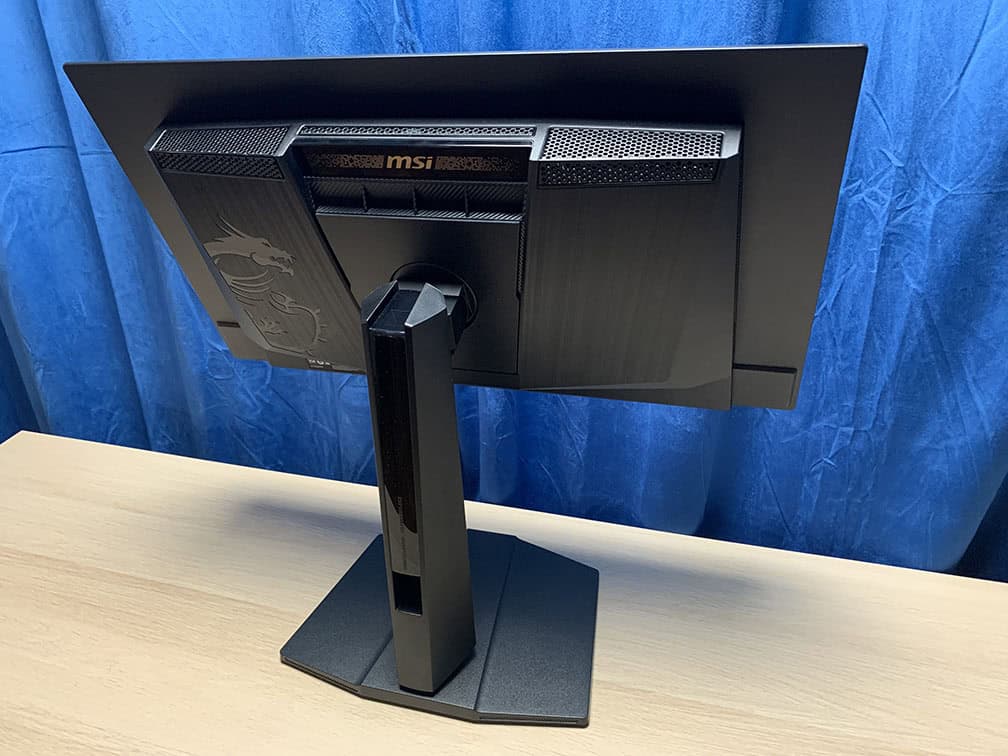
The stand of the monitor is sturdy and offers height adjustment up to 110mm, +/- 30° swivel, -5°/20° tilt, +/- 90° pivot and 100x100mm VESA mount compatibility.
The screen has a typical QD-OLED semi-glossy finish for more vibrant image quality (but also more reflective screen surface).
Connectivity options include DP 1.4 with DSC, two HDMI 2.1 ports with DSC, a USB-C port with DP Alt Mode and 15W PD and a headphone jack.
Alternatives
There’s also the MSI MPG 271QR QD-OLED X50 version with higher Power Delivery over USB-C, built-in KVM and better-tuned EOTF Boost mode for $50 – $100 more.
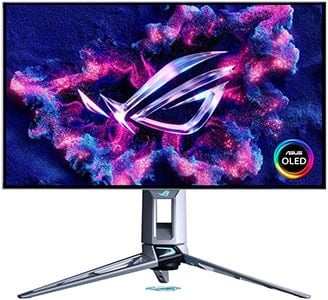
ASUS PG27AQWP-W
1440p 540Hz OLED Monitor With 720p 720Hz Dual Mode
Size: 26.5”
Resolution: 2560×1440
Panel: OLED
Refresh Rate: 540Hz, 720p 720Hz
The Pros:
- Infinite contrast ratio, decent peak brightness, wide color gamut
- Instant response time
- Plenty of features, including VRR up to 540FPS, 720p 720Hz Dual Mode
- Fully ergonomic design
- 3-year warranty that covers burn-in
The Cons:
- Risk of burn-in
- Not as bright as mini LED displays
About The Monitor
The main competitor to the MSI MAG 272QP QD-OLED 500Hz is the ASUS ROG Swift PG27AQWP-W with a W-OLED panel and 720p 720Hz Dual Mode.
Image Quality
The PG27AQWP-W uses a newer Tandem W-OLED panel with a high maximum brightness of 1500-nits for 1.5% APL and 335-nits for 100% APL.
This is higher than that of the QD-OLED of MSI’s monitor (1000-nits 3% APL, 250-nits 100% APL), but only refers to white luminance. When it comes to color luminance, they perform similarly, with the QD-OLED being a bit brighter in <10% APL scenes.
Further, the ASUS PG27AQWP-W has an RGWB subpixel layout, which has better text clarity than the previous-gen RWBG panels, but it still has some minor fringing like the triangular subpixel layout of the QD-OLED panels.
So, when it comes to image quality, the viewing experience is similar.
The ASUS PG27AQWP-W has a TrueBlack glossy screen finish, which is more reflective (mirror-like reflections), but it doesn’t raise blacks under direct lighting like the semi-glossy finish of the QD-OLED panels, resulting in a more vivid image.
The main difference between the two panels comes down to performance. While there’s no perceptible difference between 500Hz and 540Hz, the PG27AQWP-W offers a 720p 720Hz mode for an even more responsive gameplay.
Of course, 1280×720 is going to look a bit blurry on a 27″ sized screen with only 54 PPI (pixels per inch), but some gamers are willing to sacrifice image quality for a boost in responsiveness.
In fact, certain competitive players deliberately use lower resolutions and stretched aspect ratios in Esports titles like CS: GO to maximize frame rates and perceived motion clarity. You can also run 720Hz at 1176×664, 1024×768, 960×720 and 800×600.
The ASUS PG27AQWP-W also supports BFI at 120Hz and 270Hz (but not in Dual Mode), and offers typical gaming features, such as crosshair overlays, Shadow Boost, timer, Sniper and a refresh rate tracker.
Design & Connectivity
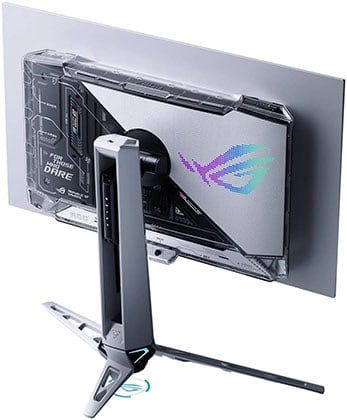
The stand offers full ergonomic support, including up to 110mm height adjustment, -5°/20° tilt, +/- 30° swivel, +/- 90° pivot and 100x100mm VESA mount compatibility.
Connectivity options include DisplayPort 2.1 with full UHBR20 bandwidth, two HDMI 2.1 ports, a headphone jack, and a USB hub (3x downstream, 1x type B).
Alternatives
- LG 27GX790B – based on the same panel with DP 2.1 (UHBR13.5), USB-C (DP Alt Mode, 5W PD), matte anti-glare coating and no BFI for $800 – $900

ASUS XG27UCDMG
Best Value 27″ 4K 240Hz OLED Gaming Monitor
Size: 27”
Resolution: 3840×2160
Panel: OLED
Refresh Rate: 240Hz
The Pros:
- Infinite contrast ratio, decent peak brightness, wide color gamut
- High pixel density
- Instant response time
- Plenty of features, including VRR up to 240Hz, BFI up to 120Hz
- Fully ergonomic design
- 3-year warranty that covers burn-in
The Cons:
- Risk of burn-in
- Not as bright as mini LED displays
About The Monitor
If you’re after a 27″ 4K 240Hz OLED gaming monitor, we recommend the ASUS XG27UCDMG!
Image Quality
Based on a QD-OLED panel, the ASUS XG27UCDMG delivers all the same key specifications, including 99.3% DCI-P3 color gamut, 250-nits peak brightness (1000-nits for 3% APL), 10-bit color depth, 178° viewing angles, etc.
What makes this panel exceptional is the 4K UHD resolution being display on a 26.6″ viewable screen, resulting in the highest pixel density available on any high refresh rate monitor so far! With 166 PPI, you get incredible detail clarity and the previous issues with fringing on small text are now completely gone.
On top of that, you get smooth performance with 240Hz refresh rate, low input lag, VRR support and even BFI up to 120Hz!
The ASUS XG27UCDMG also offers plenty of useful features, such as crosshair overlays, VRR Anti-Flicker, Shadow Boost, factory-calibrated sRGB mode without locked settings and advanced OLED care features, including the Neo Proximity Sensor that shuts down the display when it detects that no one is in front of it.
Design & Connectivity

The stand of the monitor offers height adjustment up to 120mm, +/- 90° pivot, +/- 45° swivel, -5°/20° tilt and 100x100mm VESA mount compatibility. There’s also a 1/4″ tripod socket, RGB lighting and a phone groove/holder on the stand.
Connectivity options include DP 1.4 with DSC, two HDMI 2.1 ports, a headphone jack, three USB-A 3.0 ports and a USB-C port with DP Alt Mode and 90W PD.
The monitor has the same semi-glossy finish as most QD-OLED panels.
Alternatives
| Dell AW2725Q | ASUS XG27UCDMG | ASUS PG27UCDM | MSI MPG 272URX | Samsung G81SF | |
| Screen | Glossy | Glossy | Glossy | Glossy | Matte |
| Dolby Vision | Yes | No | Yes | No | No |
| USB-C (PD) | N/A | 90W | 90W | 98W | N/A |
| KVM | N/A | Yes | Yes | Yes | N/A |
| DisplayPort | 1.4 | 1.4 | 2.1 | 2.1 | 1.4 |
| Cooling | Active | Passive | Passive | Passive | Passive |
| BFI | N/A | Yes | Yes | N/A | N/A |
| Advanced OLED Care | N/A | Yes | Yes | Yes | Yes |
| Price (MSRP) | $900 | $1100 | $1300 | $1200 | $1300 |
There’s also the MSI MAG 272UP QD-OLED X24 variant without KVM and with USB-C with lower 15W PD for $800.
MSI MPG 321URX
32″ 4K 240Hz QD-OLED Gaming Monitor
Size: 31.5”
Resolution: 3840×2160
Panel: OLED
Refresh Rate: 240Hz
The Pros:
- Infinite contrast ratio, decent peak brightness, wide color gamut
- High pixel density
- Instant response time
- Plenty of features, including VRR up to 240Hz
- Ergonomic design and rich connectivity options, including KVM and USB-C with 90W PD
- 3-year warranty that covers burn-in
The Cons:
- Risk of burn-in
- Not as bright as mini LED displays
About The Monitor
In case you’d rather have a larger screen with a higher resolution and a still rapid 240Hz refresh rate, the MSI MPG 321URX is for you!
Image Quality
The difference between 240Hz and 360Hz is not that noticeable, so a lot of gamers will be interested in the MSI MPG 321URX with a 31.5″ 4K panel.
Just like the 271QRX, the 32″ model uses Samsung’s QD-OLED panel with the same semi-glossy finish, improved subpixel layout, 250-nits/1000-nits peak brightness and wide color gamut. It also has excellent Delta E < 2 factory calibration for both sRGB and DCI-P3.
The MSI MPG 321URX also offers a higher resolution, which results in a higher pixel density with 140 PPI for sharper text and details.
You also get the same gaming features, such as PiP/PbP, crosshair overlays, Night Vision, etc.
Check out our full MSI MPG 321URX review for more details.
Design & Connectivity

The stand of the monitor is sturdy and offers a good range of ergonomics, including up to 110mm height adjustment, -5°/15° tilt, +/- 30° swivel, +/- 10° pivot for balancing and 100x100mm VESA mount compatibility.
It has a heatsink for cooling and a semi-glossy screen finish for a more vivid image, but it’s reflective and raises the black level when hit with direct lighting.
Connectivity options include DisplayPort 1.4 with DSC, two HDMI 2.1 ports with full 48 Gbps and CEC support, USB-C with DP Alt Mode and 90W Power Delivery, a dual-USB 2.0 hub (2 downstream + 1 upstream type B), a headphone jack and built-in KVM functionality.
Alternatives
The MSI MPG 321URX is the most affordable 32″ 4K 240Hz QD-OLED model in the US, going for just $900. However, in other regions, the following alternatives might be cheaper. Here’s a comparison of all 32″ 4K 240Hz QD-OLED models available.
| Dell AW3225QF | MSI 321CURX | ASUS PG32UCDM | Samsung G80SD | Gigabyte FO32U2 | Gigabyte FO32U2P | MSI 321URX | MSI 321UPX | HP Omen Transcend 32 | |
| Screen | Glossy (Curved) | Glossy (Curved) | Glossy | Matte | Glossy | Glossy | Glossy | Glossy | Glossy |
| Video Ports | DP 1.4, 2x HDMI 2.1 | DP 1.4, 2x HDMI 2.1, USB-C 98W | DP 1.4, 2x HDMI 2.1, USB-C 90W | DP 1.4, 2x HDMI 2.1 | DP 1.4, 2x HDMI 2.1, USB-C 18W | DP 2.1, mini-DP 2.1, 2x HDMI 2.1, USB-C 65W | DP 1.4, 2x HDMI 2.1, USB-C 90W | DP 1.4, 2x HDMI 2.1, USB-C 15W | DP 2.1, 2x HDMI 2.1, USB-C 140W |
| Other Ports | 3x USB-A, USB-B, USB-C | 2x USB-A, USB-B | 3x USB-A USB-B, HP, SPDIF | 2x USB-A, USB-B | 2x USB-A, USB-B, HP, Mic, 2x5W | 2x USB-A, USB-B, HP, Mic, 2x5W | 2x USB-A, USB-B, HP | HP | 3x USB-A, 2x USB-C, HP, 4x3W |
| Dolby Vision | Yes | No | Yes | No | No | No | No | No | Yes |
| KVM | No | Yes | Yes | No | Yes | Yes | Yes | No | Yes |
| Cooling | Active | Passive | Passive | Passive | Passive | Passive | Passive | Passive | Active |
| Burn-in warranty | 3 years | 3 years | 3 years | 3 years | 3 years | 3 years | 3 years | 3 years | 3 years |
| Price (MSRP) | $1200 | $850 | $1300 | $1300 | $1100 | $1200 | $900 | $800 | $1,300 |
MSI also offers the MSI MPG 321URXW with white design and the MSI MPG 322URX with DisplayPort 2.1 (80 Gbps).
Note that there are also cheaper 32″ 4K 165Hz QD-OLED models, such as the MSI MGA 321UP.
In 2024, other manufacturers are going to release various 32″ 4K 240Hz QD-OLED flat-screen models as well. Check out our OLED monitors article for more details.

ASUS XG32UCWMG
32″ 4K 240Hz W-OLED Gaming Monitor
Size: 31.5”
Resolution: 3840×2160
Panel: OLED
Refresh Rate: 240Hz, 1080p 480Hz
The Pros:
- Infinite contrast ratio, decent peak brightness, wide color gamut
- High pixel density
- Instant response time
- Plenty of features, including VRR up to 240Hz, 1080p 480Hz Dual Mode, and BFI up to 120Hz
- Ergonomic design, KVM, USB-C 15W PD
- 3-year warranty that covers burn-in
The Cons:
- Risk of burn-in
- Not as bright as mini LED displays
About The Monitor
Next, here’s the ASUS XG32UCWMG. It uses a 32″ 4K 240Hz W-OLED panel by LG and supports a 1080p 480Hz Dual Mode!
Image Quality
The ASUS XG32UCWMG uses a newer RGWB subpixel layout, so just like with the 32″ 4K QD-OLED panels, text fringing on small details and text is no longer an issue.
You also get an improved brightness performance thanks to the MLA+ panel, with a peak brightness of up to 1,300-nits for < 3% APL, 750-nits for 10% APL and 275-nits for 100% APL. However, keep in mind again, that these measures refer to white luminance and that QD-OLED panels have a higher color luminance as well as a wider color gamut, which results in a higher perceived brightness in the end.
Still, the ASUS XG32UCWMG has a wide 98.5% DCI-P3 color gamut and decent peak brightness, resulting in a vibrant image quality.
The main reason to consider this model is, of course, the 1080p 480Hz Dual Mode. With a press of a button, the monitor can swap between 4K 120Hz and 1080p 480Hz modes for improved motion clarity and reduced latency in competitive games.
Naturally, since the 1920×1080 resolution will be displayed on a large 31.5″ sized screen, the image quality won’t be nearly as good due to the low pixel density, but this won’t be that big of an issue in fast-paced competitive games.
Noteworthy features include VRR up to 240Hz, BFI up to 120Hz, Shadow Boost, crosshair overlays, a refresh rate tracker and more.
Design & Connectivity
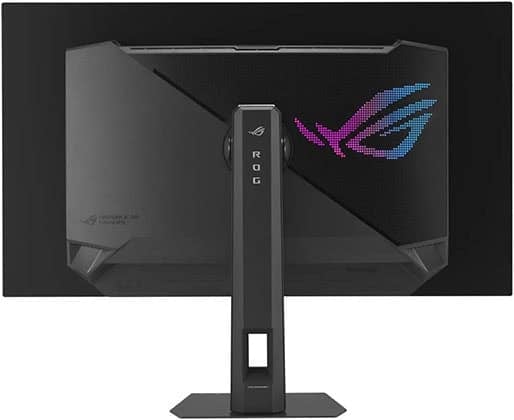
The stand of the monitor offers height adjustment up to 80mm, +/- 15° swivel, -5°/20° tilt and 100x100mm VESA mount compatibility.
The screen has ASUS’ TrueBlack glossy coating, which offers a more vivid image quality (but it’s also more reflective). Moreover, unlike QD-OLED’s semi-glossy finish, it doesn’t raise blacks when hit by direct lighting.
Connectivity options include DP 1.4 with DSC, two HDMI 2.1 ports with full 48 Gbps bandwidth, USB-C with DP Alt Mode and 15W PD, three downstream USB-A 3.0 ports, USB-B, built-in KVM and a headphone jack.
Alternatives
- ASUS XG32UCWG – same model with lower 165Hz refresh rate (1080p 330Hz) for $100 less
- LG 32GS95UE – LG’s model based on the same panel, however, it doesn’t have USB-C, KVM or ELMB. Moreover, its burn-in warranty is only 2 years
- ASUS PG32UCDP – ASUS’ model with higher 98W PD over USB-C and a matte anti-glare coating
- KTC G32P5 – KTC’s model, the most affordable option in Europe, but it’s not available in the US
For more alternatives, check out our OLED monitors article.

LG OLED42C5
Best 42″ HDR Gaming Display
Size: 42”
Resolution: 3840×2160
Panel: OLED
Refresh Rate: 144Hz
The Pros:
- Infinite contrast ratio, decent peak brightness, wide color gamut
- Instant response time
- Plenty of features, including VRR up to 144Hz
- Rich connectivity options, smart OS
The Cons:
- Risk of burn-in
- Noticeable text fringing due to RWBG subpixel layout
- Not as bright as mini LED displays
About The Monitor
Looking for a larger OLED monitor? A lot of gamers absolutely love LG’s 42″ C5 TV and find its size manageable as a desktop monitor.
Image Quality
For most people, a 42″ screen will be too big for regular desktop use. However, if you don’t mind its size, the LG OLED42C5 offers exceptional value for the money as it can be found for as low as $900!
It offers a similar image quality as that of other OLED displays with wide viewing angles, a wide color gamut, an infinite contrast ratio and decent brightness. 4K UHD resolution also results in a similar pixel density of 106 PPI on the 42″ sized screens.
Motion clarity is not as smooth due to the lower 120Hz refresh rate, but you still get instantaneous pixel response time speed and smooth VRR performance.
Since it is a TV, you also get all the smart features and even Dolby Vision support.
Design & Connectivity
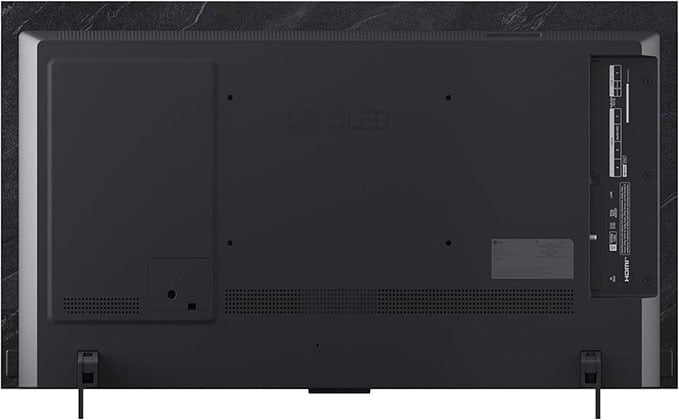
The LG OLED42C5 has a design with legs to better fit on a regular PC desk, but there are no ergonomic adjustments apart from VESA mount compatibility. It has a glossy screen finish for a more vibrant image quality, but it’s reflective.
Connectivity options include four HDMI 2.1 ports, RJ45, tuner, composite-in, both analog and digital audio jacks, three USB 2.0 ports, WiFi, Bluetooth and dual 10W built-in speakers (no subwoofer).
Conclusion
Found the best HDR monitor for you?
Feel free to leave us any questions you might have in the comments below!
All in all, we recommend the MSI MPG 321URX. If you don’t need USB ports and high power delivery, get the cheaper MAG 321UPX model, and if you don’t need 240Hz, get the even cheaper MAG 321UP model with 165Hz.
Of course, if you’re too worried about burn-in and/or would prefer a brighter image, the KTC M32P10 and the BenQ EX321UX are excellent mini LED alternatives.
In case you prefer the ultrawide format, go with the MSI MPG 341CQPX.
If you want a smaller 27″ screen, the MSI MAG 272QP QD-OLED X50 is the best model available. If you don’t need 500Hz, get the MPG 271QRX – or the MAG 271QPX if you don’t need high USB-C PD and USB ports, and the MAG 271QPX E2 variant if you’re okay with the lower 240Hz refresh rate. For higher-resolution models, we recommend the ASUS XG27UCDMG.
However, the KTC M27T6 and the KTC M27P6 offer exceptional value for the price here as well. So, if you can tolerate a bit of blooming, they’ll provide you with a brighter image and no fear of burn-in.
In case you want a big-format gaming display, the LG OLED42C5 offers amazing value for the price, while the Samsung Neo G9 G95NC, the LG 39GS95QE, the LG 45GX950A, and the MSI 491CQPX are worth considering if you want something extravagant.
Changelog +
- March 1, 2026:
– Added a review summary for the ASUS PG27AQWP-W. - February 15, 2026:
– Added the AOC Q27GAZD, the ASUS XG27AQWMG and the ASUS PG27AQWP-W to the table. Review summaries will be added soon. - November 27, 2025:
– Replaced the LG 45GS95QE with the LG 45GX900A.
– Added the MSI MAG 272QPW QD-OLED X28. - November 25, 2025:
– Added the Innocn 25M2S, the Acer XV275U F3 and the Acer X34 X0. - November 21, 2025:
– Checked up on the guide to ensure that our picks are still the best options available. - October 13, 2025:
– Replaced the ASUS PG32UCDP with the ASUS XG32UCWMG. - October 11, 2025:
– Replaced the Innocn 32M2V with the KTC M32P10, the AOC Q27G40XMN with the KTC M27T6, the 42C4 with the 42C5, and the ASUS PG27AQDP with the MSI MAG 272QP QD-OLED X50.
– Removed the Xiaomi G Pro 27i, the AOC AG274QZM, the Samsung Neo G7 and the Innocn 34M1R. - July 9, 2025:
– Added the KTC M27T6 and KTC M27P6 to the table. Review summaries will be added soon. - April 24, 2025:
– Replaced the AOC Q27G3XMN with the AOC Q27G40XMN. - April 10, 2025:
– Added review summaries for the LG 45GX950A and the ASUS XG27UCDMG. - March 27, 2025:
– Added the MSI MPG 272URX and the LG 45GX950A to the table. Review summaries will be added to the article soon. - January 11, 2025:
– Replaced the Samsung OLED G9 with the MSI MPG 491CQPX. - November 23, 2024:
– Replaced the Cooler Master Tempest G27Q with the Xiaomi G Pro 27i, and the LG OLED42C3 with the OLED42C4.
– Added more alternatives for the MSI MPG 271QRX and 321URX models. - October 17, 2024:
– Added the BenQ EX321UX. - September 11, 2024:
– Added the ASUS PG27AQDP. - August 2, 2024:
– Replaced the LG 32GS95UE with the ASUS PG32UCDP. - July 23, 2024:
– Added the MSI MPG 341CQPX and the LG 45GS95QE. - May 3, 2024:
– Added the LG 39GS95QE. - March 29, 2024:
– Replaced the Dell AW2725DF with the MSI MPG 271QRX, and the Dell AW3225QF with the MSI MPG 321URX. - February 6, 2024:
– Replaced the Acer X32FP with the Innocn 32M2V.
– Added the Innocn 34M1R. - January 15, 2024:
– Replaced the ASUS PG27AQDM with the Dell AW2725DF.
– Added the Dell AW3225QF. - November 24, 2023:
– Checked up on the guide to ensure that our picks are still the best options available. - October 30, 2023:
– Added the AOC Q27G3XMN.
– Added review summaries for the Samsung OLED G9 and Samsung G95NC monitors. - April 23, 2023:
– Replaced the LG 27GR95QE with the ASUS PG27AQDM. - March 10, 2023:
– Added the LG 27GR95QE, the Innocn 27M2V, the Acer X32FP, the AOC AG274QZM, and the Corsair Flex. - November 22, 2022:
– Replaced the Dell Alienware AW3423DW with the AW3423DWF model. - November 9, 2022:
– Removed the Sony Inzone M9.
– Added the Cooler Master Tempest GP27U and GP27Q. - July 22, 2022:
– Added the Samsung Odyssey Neo G7. - April 21, 2022:
– Added the LG OLED42C2. - March 11, 2022:
– Replaced the ASUS PG35VQ, PG27UQ and PG32UQX with the Dell AW3423DW. - February 1, 2022:
– Included upcoming monitors announced at CES as alternatives where appropriate. - December 11, 2021:
– Added review summaries for the monitors that were missing them. - November 24, 2021:
– Checked up on the guide to ensure that our picks are still the best options available. - August 10, 2021:
– Added the ASUS PG32UQX, the Samsung Neo G9, the LG OLED48C1, and the Acer XB323UGX to the table; dedicated review sections will be added soon.
– Replaced the Philips 436M6 with Gigabyte FV43U, the Acer XB323UGP with ASUS PG329Q, the LG 27GN950 with LG 27GP950, the LG 38GN950 with Dell AW3821DW, and the LG 32UL500 with BenQ EW3270U. - December 15, 2020:
– Added the Dell AW2721D and the Acer XB323UGP.
– Removed the ASUS CG32UQ as it’s too expensive. The Samsung G7 is a much better option for the money.


